


Daily Guinea Pig Care: The Simple Routine That Keeps Them Thriving


Caring for guinea pigs does not have to be complicated. In fact, the healthiest pigs usually come from the most consistent routines. A few simple daily habits can prevent serious health problems, reduce stress, and help your guinea pigs live long, comfortable lives.
Whether you are a new owner or a seasoned pig parent, this daily care guide covers the essentials every guinea pig needs to thrive.

Unlimited Fresh Hay: The Foundation of Guinea Pig Health
Fresh hay should be available to your guinea pigs at all times. It is the single most important part of their diet.
Hay supports digestion, helps prevent gastrointestinal stasis, and naturally wears down constantly growing teeth. Without enough hay, guinea pigs can quickly develop serious dental and digestive issues.
Timothy hay is ideal for most adult guinea pigs, while younger pigs may benefit from orchard grass or a mix. Check hay racks daily and refill often. If the hay bin is empty, it is time to restock immediately.
Clean, Cool Water Every Day
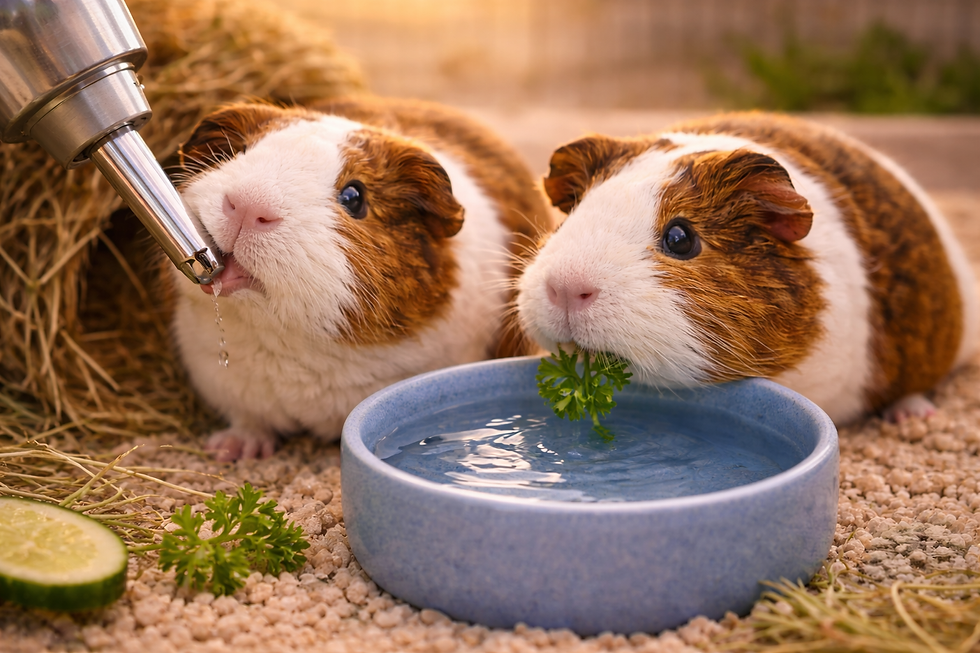
Fresh water must always be available. Guinea pigs are sensitive to dehydration, which can contribute to bladder problems and digestive slowdowns.
Refill water bottles daily and check them twice to ensure they are working properly. Bottles can clog, and bowls can become dirty quickly. Many owners choose to provide both a bottle and a bowl for added reliability.
Clean water containers regularly to prevent biofilm buildup and bacteria growth.
Fresh Vegetables for Daily Vitamin C
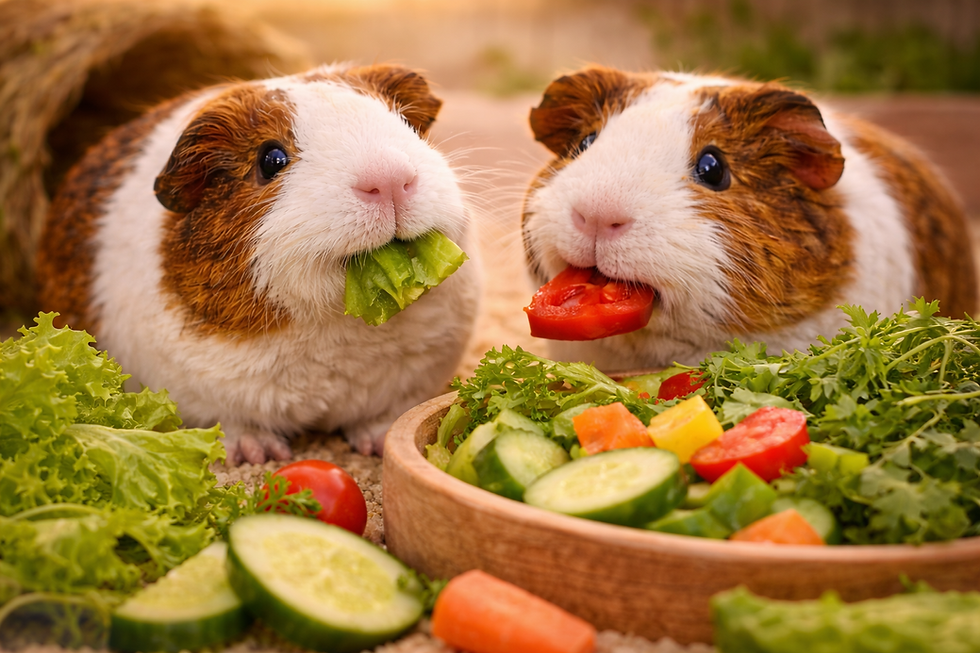
Guinea pigs cannot produce their own vitamin C, so they must receive it from their daily diet. Fresh vegetables are essential.
A general guideline is about one cup of fresh vegetables per guinea pig each day. Good staples include:
Romaine lettuce
Green leaf lettuce
Bell peppers
Cilantro and parsley
Small amounts of cucumber or zucchini
Rotate vegetables regularly to provide variety and balanced nutrition. Avoid sugary treats and fruits as daily foods. These should be offered sparingly.

Daily Habitat Spot Cleaning
A few minutes of daily cleaning makes a significant difference in your guinea pigs’ health and comfort.
Each day, remove wet bedding, scoop droppings, and shake out fleece areas if you use fleece liners. Keeping the habitat clean helps prevent odor, bacteria buildup, and foot issues such as bumblefoot.
Regular spot cleaning also allows you to observe changes in droppings or urine that may signal health concerns.
Quick Daily Health Check
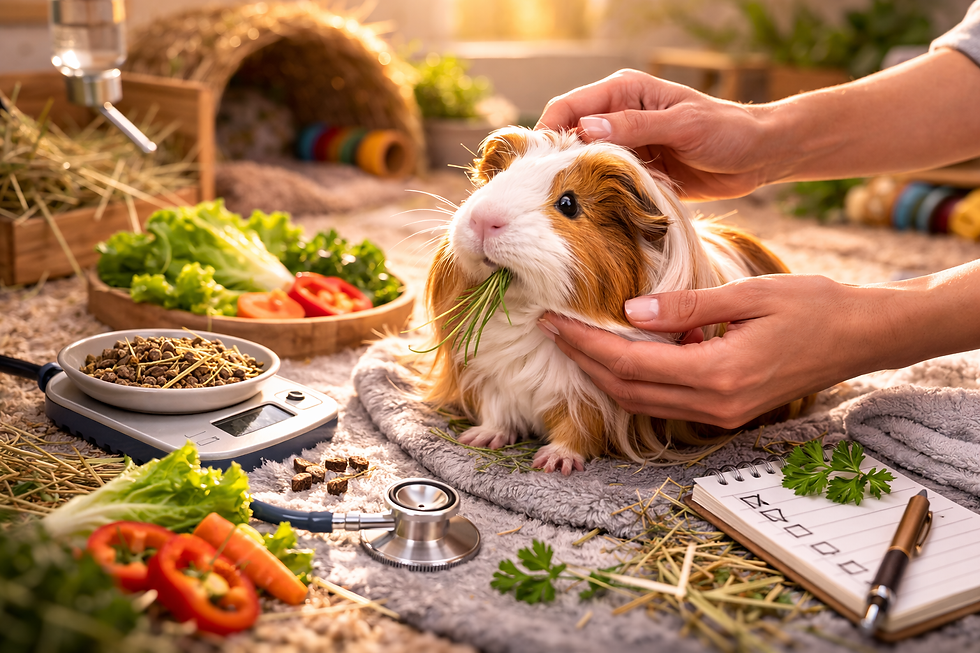
Routine care time is the perfect opportunity to observe your guinea pigs closely. Because they are prey animals, guinea pigs often hide signs of illness until problems become serious.
Look for:
Bright, clear eyes
Clean nose with no discharge
Normal, well-formed droppings
Strong, steady appetite
Normal activity levels
You know your guinea pigs’ normal behavior better than anyone. If something feels off, trust your instincts and monitor closely.

Weekly Weight Monitoring
One of the best ways to detect illness early is by tracking weight. Guinea pigs often lose weight before other symptoms appear.
Weigh each guinea pig weekly using a digital kitchen scale and record the numbers in a notebook or app. A sudden drop in weight should always be taken seriously and may require a veterinary visit.
Consistent tracking allows you to notice subtle changes before they become emergencies.

Social Time and Interaction
Guinea pigs are herd animals. They thrive on companionship, both with other guinea pigs and with their humans.
Daily interaction helps build trust and keeps them mentally stimulated. Provide:
Safe floor time in a secure area
Gentle handling and interaction
Calm conversation and presence
Even simply sitting near their enclosure and talking to them can provide reassurance and enrichment.

A Safe, Calm Environment
Guinea pigs are sensitive to stress. Loud noise, unstable temperatures, and constant disruption can negatively affect their health.
Create a peaceful environment with:
Stable indoor temperatures
Protection from drafts and heat
Secure hideouts where they can feel safe
A predictable daily routine
When guinea pigs feel safe, they eat better, socialize more, and stay healthier overall.

The Bottom Line: With Guinea Pig Care Consistency Matters Most
Small daily habits prevent big emergencies.
You do not need perfection to be a great guinea pig owner. You need consistency. Fresh hay, clean water, healthy food, observation, and a calm environment form the foundation of excellent care.
When these simple routines become part of daily life, your guinea pigs will reward you with trust, personality, and years of companionship.
Follow The Cavy Whisperer for practical guinea pig care tips, and visit the Guinea Pig Gift Shop to support the herd and continue learning how to give your pigs the best life possible.


Comments