


How to Use Fleece as Guinea Pig Bedding (The Right Way


Fleece bedding can be cozy, cost-effective, and eco-friendly — but only if it’s done correctly.
Used the wrong way, fleece becomes damp, smelly, and frustrating.
Used the right way, it creates a clean, dry, comfortable home your guinea pigs can truly relax in.
Here’s exactly how to set it up.

Why Choose Fleece for Guinea Pig Bedding?
Many guinea pig parents switch to fleece because it’s:
Reusable
Lower waste than disposable bedding
Soft on delicate feet
More affordable long-term
Unlike paper bedding, fleece doesn’t get kicked everywhere. It also allows you to create a tidy, structured setup inside the habitat.
But fleece alone is not enough.

The Secret: Fleece Must Be Prepped to Wick
Brand-new fleece repels liquid. If you skip this step, urine will sit on top instead of passing through.
Before using fleece:
Wash it 2–3 times
Use regular detergent only
No fabric softener
No dryer sheets
Fabric softeners coat the fibers, preventing wicking.
The Water Test
Pour a small amount of water on top of the fleece.
If it:
Soaks straight through → It’s ready.
Beads up on top → Wash again.
Wicking is what keeps the surface dry for your pigs.

You Need Layers (Fleece Alone Is Not Enough)
Think of fleece as the surface layer only. A proper fleece system looks like this:
Top Layer: Fleece
Middle Layer: Absorbent pad
U-Haul furniture pad
Towels
Mattress protector
Bottom Layer: Waterproof liner or coroplast base
The fleece allows liquid to pass through.
The absorbent layer traps and holds moisture underneath.
That’s what keeps paws dry.

Spot Clean Daily (It Takes 3–5 Minutes)
Daily maintenance makes fleece bedding work.
Each day:
Remove poops
Shake out loose hay
Replace heavily soaked corners
This small routine prevents odor buildup and extends the life of your full bedding change.
Consistency matters more than perfection.

How Often Should You Fully Change Fleece?
There isn’t one perfect answer. It depends on your setup.
Small cage: 2–3 times per week
Mid-size C&C: Every 3–4 days
Large habitat: 1–2 times per week
It depends on:
Number of pigs
Cage size
How chaotic the hay situation is
If you smell it before you see it, it’s overdue.

Control the Hay Zone (Create a Kitchen Area)
One of the biggest mistakes people make is letting hay cover the entire cage.
Instead, create a designated “kitchen” area:
A hay box or hay rack
A litter tray with bedding
A separate absorbent pad under the hay
This keeps most moisture and mess in one location and helps the rest of the fleece stay drier longer.
It also makes spot cleaning much easier.

Common Fleece Bedding Mistakes
Avoid these:
Using one thin blanket only
Skipping prep washing
Letting fleece stay damp
Ignoring odor
Fleece requires a system and a routine. When maintained properly, it works beautifully. When neglected, it fails quickly.
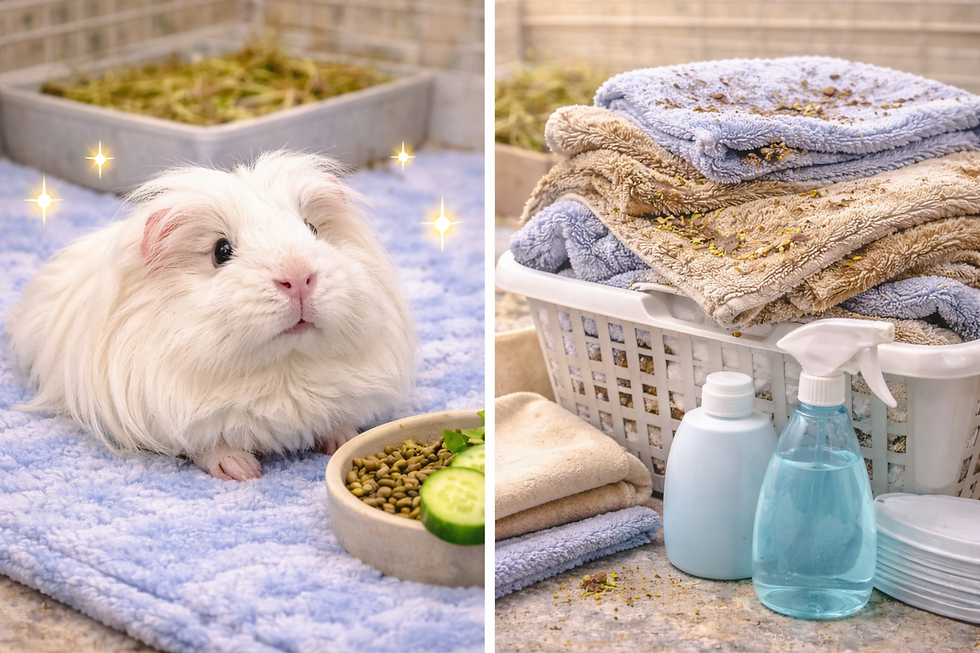
Pros & Cons of Fleece Bedding
Pros
Eco-friendly
Soft and cozy
Lower long-term cost
Cons
Requires laundry
Higher upfront setup cost
Needs consistent maintenance
If you don’t mind laundry and daily spot cleaning, fleece can be an excellent option.
If you prefer low-maintenance weekly dumps, paper bedding may suit you better.

Is Fleece Right for Your Herd?
Some pigs thrive on fleece.
Some owners prefer paper bedding.
There isn’t one “correct” bedding choice.
The best bedding is:
Clean. Dry. Safe. Maintained.
That’s what matters.


Comments